Reading this week on John Wesley's theology and came across this:
"Thus, as Wesley understood and practiced theology, the defining task of "real" theologians was neither developing an elaborate System of Christian truth-claims nor defending these claims to their "cultured despisers"; it was nurturing and shaping the worldview that frames the temperament and practice of believers' lives in the world. Theologians may well engage in apologetic dialogues or in reflection on doctrinal consistency, but ideally because -- and to the extent that -- these are in service to their more central task."
Sometimes it's difficult to remember, while in the midst of writing my dissertation, exactly what purpose it's going to serve; so I'm grateful to God for these simple, daily reminders of who I am and what I'm to be about. And I'm all the more grateful to be blessed with advisors and friends who not only agree with this, but insist upon it.
Tuesday, March 29, 2011


Wednesday, March 23, 2011
Some good news.....for me......
Over the last year I've been walking pretty closely with a friend (of many years) who is trying to put his life back together after an extended stay in prison. In respect of his privacy I will not go into the details surrounding his incarceration or his life in general. What I will say is that he, like most other "ex-cons," is finding it very hard to make the adjustment to life "outside the walls." As he looks for gainful employment and relationship, he drags with him every day the permanent ball-and-chain of "felony offender," as well as the deleterious effects of the enforced "institutionalization" mentality (and the related damage caused by "doing what you've got to do" to survive in prison). It is a difficult and perpetually painful journey for him that I can't begin to understand. All that I can do, as a person of quite considerable privilege, is to try to do my best to be present with him in the struggle and assist him in opening what windows of opportunity he can. He has undoubtedly made some mistakes, and he undoubtedly could have chosen to make some different choices at certain important points of time; but what anyone in my position cannot (in time) fail to recognize is that some of us undoubtedly pay a much steeper and more permanent cost for our mistakes than do others. What my friend is suffering at the moment borders upon and routinely crosses over into what Zygmunt Bauman calls, "Civic Death"-a form of life-long exclusion from the mainstream of society (quoting from Morelly's work entitled the "Code of Nature"). And it conjures up for me another further thought from Bauman's work on "The Human Costs of Globalization (from the section entitled "Factories of Immobility):"
"(Pierre) Bourdieu points out that the State of California, celebrated by some European sociologists as the very paradise of liberty, dedicates to the building and the running costs of prisons a budget transcending by far the sum total of state funds allocated to all the institutions of higher education. Imprisonment is the ultimate and most radical form of spacial confinement. It also seems to be the main concern and focus of attention of the government by the political elite at the forefront of contemporary 'time/space compression.'
Spatial confinement, incarceration of varying degrees of stringency and harshness, has been at all times the prime method of dealing with the unassimilable, difficult-to-control, and otherwise trouble-prone sectors of the population. Slaves were confined to the slave quarters. So were lepers, madmen, and ethnic or religious aliens. If allowed to wander beyond their allotted quarters, they were obliged to wear the signs of their spatial assignment so that everybody was aware that they belonged to another space. Spatial separation leading to enforced confinement has been over the centuries almost a visceral, instinctual fashion of responding to all difference, and particularly such difference that could not be, or was not wished to be, accommodated within the web of habitual social intercourse. The deepest meaning of spatial separation was the banning or suspension of communication, and so the forcible estrangement.
Estrangement is the core function of spatial separation. Estrangement reduces, thins down and compresses the view of the other: individual qualities and circumstances which tend to be vividly brought within sight thanks to the accumulated experience of daily intercourse, seldom come into view when the intercourse is emaciated or prohibited altogether: typification takes then the place of personal familiarity, and legal categories meant to reduce the variance and to allow it to be disregarded render the uniqueness of person and cases irrelevant (p.106-7)."
So, as I'm reflecting today upon my friends struggle (trying to stave-off the spectre of "Civic Death"), wringing my hands over the extensive ongoing implications of the (aptly) so-called "prison-industrial complex" and working to continue building my own estimate of the costs of the "glocalization" of society, I was reminded of that (now much deeper) statement of Jesus: "I was in prison, and you visited me." This is a statement that takes on a much deeper and far more expansive meaning when we account for the analysis of Bauman and others and come to understand just how deeply this exhortation of Jesus goes, and how far it must go to become the "leaven" that slowly works its way through the deepest recesses and abscesses of our world's dysfunction and alienation bringing healing and reconciliation (mixed metaphor intended:). This is the good news! In a society where all of the different strata and groups are in some way or another, or at some point or another, variously calling for enforced "justice" and attempting to throw one another into prison for their myriad "transgressions"-the white collars and the blue collars, the lefts and the rights, the 'socialists' and the 'capitalists' the politicians and the people-Jesus steps into this picture and says what? It truly must be one of his most revolutionary and liberating statements.......
"(Pierre) Bourdieu points out that the State of California, celebrated by some European sociologists as the very paradise of liberty, dedicates to the building and the running costs of prisons a budget transcending by far the sum total of state funds allocated to all the institutions of higher education. Imprisonment is the ultimate and most radical form of spacial confinement. It also seems to be the main concern and focus of attention of the government by the political elite at the forefront of contemporary 'time/space compression.'
Spatial confinement, incarceration of varying degrees of stringency and harshness, has been at all times the prime method of dealing with the unassimilable, difficult-to-control, and otherwise trouble-prone sectors of the population. Slaves were confined to the slave quarters. So were lepers, madmen, and ethnic or religious aliens. If allowed to wander beyond their allotted quarters, they were obliged to wear the signs of their spatial assignment so that everybody was aware that they belonged to another space. Spatial separation leading to enforced confinement has been over the centuries almost a visceral, instinctual fashion of responding to all difference, and particularly such difference that could not be, or was not wished to be, accommodated within the web of habitual social intercourse. The deepest meaning of spatial separation was the banning or suspension of communication, and so the forcible estrangement.
Estrangement is the core function of spatial separation. Estrangement reduces, thins down and compresses the view of the other: individual qualities and circumstances which tend to be vividly brought within sight thanks to the accumulated experience of daily intercourse, seldom come into view when the intercourse is emaciated or prohibited altogether: typification takes then the place of personal familiarity, and legal categories meant to reduce the variance and to allow it to be disregarded render the uniqueness of person and cases irrelevant (p.106-7)."
So, as I'm reflecting today upon my friends struggle (trying to stave-off the spectre of "Civic Death"), wringing my hands over the extensive ongoing implications of the (aptly) so-called "prison-industrial complex" and working to continue building my own estimate of the costs of the "glocalization" of society, I was reminded of that (now much deeper) statement of Jesus: "I was in prison, and you visited me." This is a statement that takes on a much deeper and far more expansive meaning when we account for the analysis of Bauman and others and come to understand just how deeply this exhortation of Jesus goes, and how far it must go to become the "leaven" that slowly works its way through the deepest recesses and abscesses of our world's dysfunction and alienation bringing healing and reconciliation (mixed metaphor intended:). This is the good news! In a society where all of the different strata and groups are in some way or another, or at some point or another, variously calling for enforced "justice" and attempting to throw one another into prison for their myriad "transgressions"-the white collars and the blue collars, the lefts and the rights, the 'socialists' and the 'capitalists' the politicians and the people-Jesus steps into this picture and says what? It truly must be one of his most revolutionary and liberating statements.......
Monday, February 28, 2011
More thoughts on current events......

The developments that we've been witnessing over the last several weeks in the Middle-East have been truly remarkable. We do not know where they will eventually go or what in the long-run will be gained from them. However, despite all the attendant ambiguities, we can be encouraged that people are uniting (more or less collectively) to at the very least ask questions about where their countries are headed and what the local and global balances and imbalances of wealth, resources, trade and power mean for them. And these recent events in the Middle-East follow a long train of related events that are having, and will continue to have, a huge impact around the globe and in our local contexts (like the mass-migrations and movements of people related to globalization, wage and resource arbitrage, war etc.).
In putting this series of posts on the blog I've often been reminded of that great scene in "As Good As It Gets," where Melvin Udall, in a moment of crisis, yells at his would be counselor "I mean, I'm drowning here, and you're describing the water!"
In a way, I've wondered if all I'm doing is "describing the water," so to speak, and not really offering anything but a clearer picture of the mess in which we're "drowning." Perhaps that is true. However, when looking at the incredible complexity and confusion of the world that we've created, it seems like we could probably never spend enough time trying to learn from one another, trying to understand each other's differences and seeking to find the keys to unlocking the doors that are undoubtedly separating us (being as clear as possible about what exactly the mess is!). I was reminded of that again this morning while reading an article about the ongoing struggles in Libya, and then perusing the comments section. I was quite amazed to read this comment:
"None of our business, who gives a @!$%#. We just need a President that will hand out oil & gas drilling permits like candy. turn Alaska into our own giant gas station and the gulf also. F-the wales and the wild life. Our own way of life is being threatened in a huge way and nothing is being done. I guess this is obamas plan for America.
We need our natural resources now."
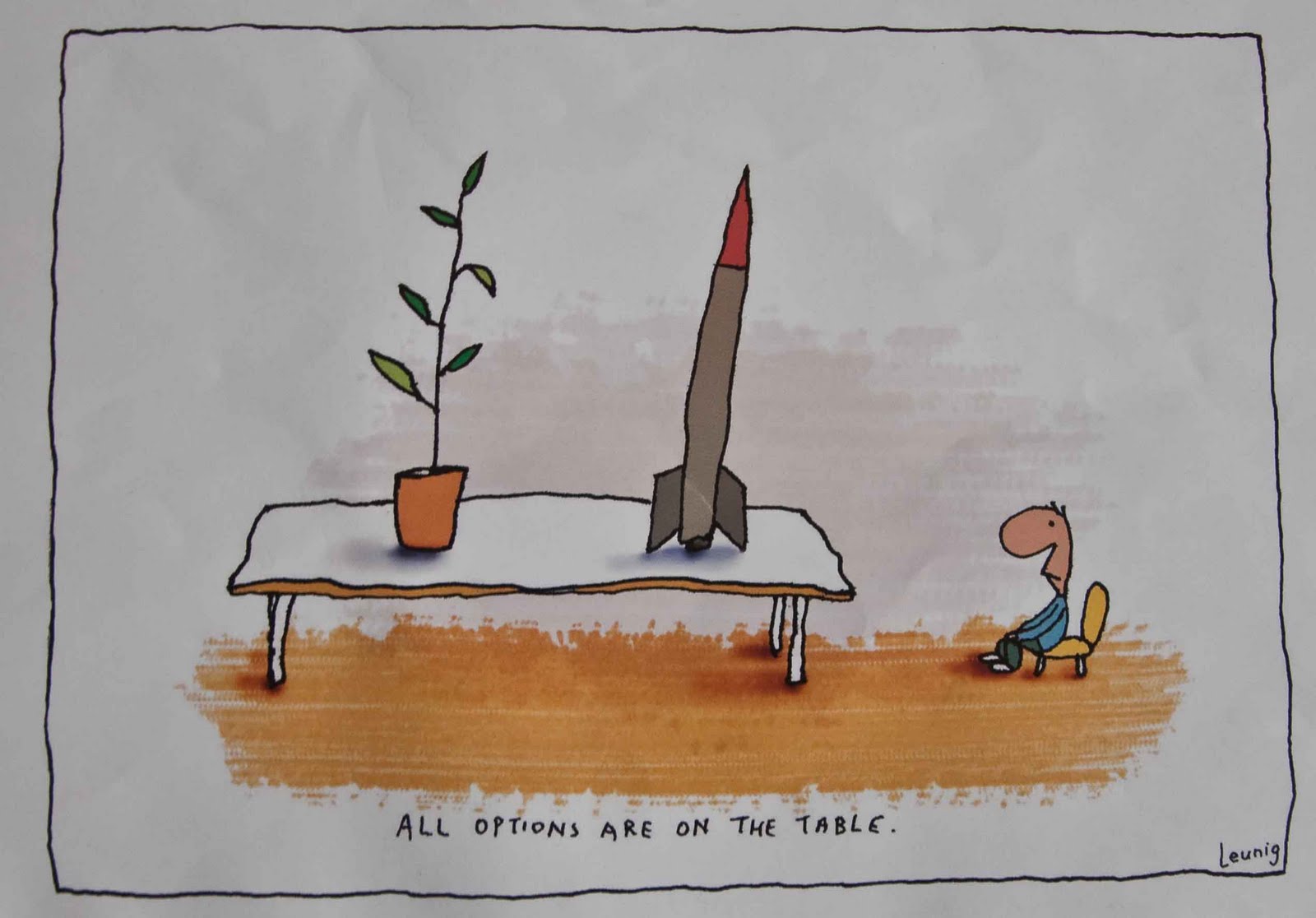
I really thought that this comment distilled, in a couple of sentences, the kind of mentality (a functional nihilism, I would say) that is driving many people to seek real movement and change in the world. I don't share it to single this person out or even to criticize. I share it because I thought it was a really great summary statement of the type of thinking that has led the world to this current threshold moment that Immanuel Wallerstein described in my previous post. I thought it would be nice to contrast this statement with some additional thoughts from Bauman's "Globalization: The Human Consequences.".....And I've thrown in another favorite Leunig of mine to summarize in ways more eloquent and inspiring than words.......
The lie of the free-trade promise is well covered up; the connection between the growing misery and desperation of the 'grounded' many and the new freedoms of the mobile few is difficult to spot in the reports coming from the lands cast on the receiving side of 'glocalization'. It seems, on the contrary, that the two phenomena belong to different worlds, each having its own, sharply distinct causes. One would never guess from the reports that the fast enrichment and fast impoverishment stem from the same root, that the 'grounding' of the miserable is as legitimate an outcome of the 'glocalizing' pressures as are the new sky's-the-limit freedoms of the successful (as one would never guess from sociological analyses of the holocaust and other genocides that they are equally 'at home' in modern society as are economic, technological, scientific and standard-of-living progress).
As Rysard Kapuscinski, one of the most formidable chronographers of contemporary living, has recently explained, that effective cover-up is achieved by three inter-connected expedients consistently applied by the media which preside over the occasional, carnival-like outbursts of public interest in the plight of the 'poor of the world.'
First, the news of a famine-arguably the last remaining reason for breaking the day-by-day indifference-as a rule comes coupled with the emphatic reminder that the same distant lands where people 'as seen on TV' die of famine and disease, are the birthplace of 'Asian Tigers,' the exemplary beneficiaries of the new imaginative and brave way of getting things done. It does not matter that all of the 'tigers' together embrace no more than 1 percent of the population of Asia alone. They are assumed to demonstrate what was to be proved-that the sorry plight of the hungry and indolent is their sui generis choice: alternatives are available, and within reach-but not taken for the lack of industry or resolve. The underlying message is that the poor themselves bear responsibility for their fate; that they could, as the 'tigers' did, choose easy prey has nothing to do with the tigers' appetites.
Second, the news is so scripted and edited as to reduce the problem of poverty and deprivation to the question of hunger alone. This stratagem achieves two effects in one go: the real scale of poverty is played down (800 million people are permanently undernourished, but something like 4 billion-two-thirds of the world population-live in poverty), and the task ahead is limited to finding food for the hungry. But, as Kapuscinski points out, such presentation of the problem of poverty (as exemplified by one of The Economist's recent issues analyzing world poverty under the heading, 'How to feed the world') 'terribly degrades, virtually denies full humanity to people whom we want, allegedly, to help'. What the equation 'poverty=hunger' conceals are many other and complex aspects of poverty-'horrible living and housing conditions, illness, illiteracy, aggression, falling apart families, weakening of social bonds, lack of future and non-productiveness'-afflictions which cannot be cured with high-protein biscuits and powdered milk.
Let us add that all associations of the horrid pictures of famine, as presented by the media, with the destruction of work and work-places (that is, with the global causes of local poverty) are carefully avoided. People are shown together with their hunger-but however the viewers strain their eyes, they will not see a single work-tool, plot of arable land or head of cattle in the picture-and one hear no reference to them. As if there was no connection between the emptiness of the routine 'get up and do something' exhortations addressed to the poor in a world which needs no more labour, certainly not in the lands where people on the screen starve, and the plight of people offered as a carnival-like, 'charity fair' outlet for pent-up moral impulse. The riches are global, the misery is local-but there is no causal link between the two; not in the spectacle of the fed and the feeding, anyway.
"Victor Hugo let Enjolras, one of his characters, wistfully exclaim a moment before his death on one of the many nineteenth-century barricades: 'The twentieth century will be happy.' As it happened-Rene Passet comments-'the same technologies of the immaterial which sustained that promise entail simultaneously its denial', particularly when 'coupled with frantic policy of planetary liberalization of capital exchanges and movements'. Technologies which effectively do away with time and space need little time to denude and impoverish space. They render capital truly global; they make all those who can neither follow nor arrest capital's new nomadic habits helplessly watch their livelihood fading and vanishing and wonder from where the blight may have come. The global travels of financial resources are perhaps as immaterial as the electronic network they travel-but the local traces of their journeys are painfully tangible and real: 'qualitative depopulation', destruction of local economies once capable of sustaining their inhabitants, the exclusion of the millions incapable of being absorbed by the new global economy.
......... "There is another important role played by the association of the 'far-away locals' with murder, epidemic and looting. Given their monstrosity, one cannot but thank God for making them what they are-the far-away locals, and pray that they stay that way.
The wish of the hungry to go where food is plentiful is what one would naturally expect from rational human beings; letting them act on their wishes is also what conscience would suggest is the right, moral thing to do. It is because of its undeniable rationality and ethical correctness that the rational and ethically conscious world feels so crestfallen in the face of the prospect of the mass migration of the poor and the hungry; it is so difficult, without feeling guilty, to deny the poor and hungry their right to go where food is more plentiful; and it is virtually impossible to advance convincing rational arguments proving that their migration would be, for them, an unreasonable decision to take. The challenge is truly awesome: one needs to deny the others the self-same right to freedom of movement which one eulogizes as the topmost achievement of the globalizing world and the warrant of its growing prosperity.......
The pictures of inhumanity which rules the lands where prospective migrants reside therefore comes in handy. They strengthen the resolve which lacks the rational and ethical arguments to support it. They help to keep the locals local, while allowing the globals to travel with a clear conscience (p.72-76)."
Wednesday, February 23, 2011
Zygmunt Bauman on envisioning the "city"
Here are some thoughts from, "Globalization: The Human Consequences," by the Polish sociologist Zygmunt Bauman that I've been contemplating a lot as I've watched Steve and Luella Pavey fight so hard for the plight of the "Dreamers" in America; and as I've considered, prayed and participated with the efforts of so many other friends working to envision and build the spaces in which we live. Though it probably wasn't his intent, Bauman brings a profound and searching analysis to the myriad issues surrounding the two simple commandments that Jesus left us:
“The lesson which planners could learn from the long chronicle of lofty dreams and abominable disasters which combine to form the history of modern architecture, is that the prime secret of a ‘good city’ is the chance it offers people to take responsibility for their acts ‘in a historical unpredictable society,’ rather than ‘in a dream world of harmony and predetermined order.’ Whoever feels like dabbling in inventing city space while guided solely by the precepts of aesthetic harmony and reason, would be well advised to pause first and ponder that ‘men can never become good simply by following the good orders or good plan of someone else.’
We may add that human responsibility, that ultimate and indispensable condition of morality of human intercourse, would find perfectly designed space to be an infertile if not downright poisonous soil. Most certainly, it would not grow, let alone thrive, in a hygienically pure space, free of surprises, ambivalence and conflict. Only such people could face up to the fact of their responsibility who would have mastered the difficult art of acting under conditions of ambivalence and uncertainty, born of difference and variety. Morally mature persons are such human beings as grow ‘to need the unknown, to feel incomplete without a certain anarchy in their lives’-who learn ‘to love the ‘otherness’ among them.’
The experience of American towns analysed by Sennet points to one well-nigh universal regularity: the suspicion against others, the intolerance of difference, the resentment of strangers, and the demands to separate and banish them, as well as the hysterical, paranoiac concern with ‘law and order,’ all tend to climb to their highest pitch in the most uniform, the most racially, ethnically and class-wise segregated, homogenous local communities.
No wonder: in such localities the support for the ‘we-feeling’ tends to be sought in the illusion of equality, secured by the monotonous similarity of everyone within sight. The guarantee of security tends to be adumbrated in the absence of differently thinking, differently acting and differently looking neighbours. Uniformity breeds conformity, and conformity’s other face is intolerance. In a homogenous locality it is exceedingly difficult to acquire the qualities and character and the skills needed to cope with human difference and situations of uncertainty; and in the absence of such skills and qualities it is all too easy to fear the other, simply for reason of being an-other-bizarre and different perhaps, but first and foremost unfamiliar, not-readily-comprehensible, not-fully fathomed, unpredictable.
The city, built originally for the sake of security-to protect residents inside the city walls against malevolent invaders always coming from outside-in our times ‘has become associated more with danger than with safety’-so says Nan Elin. In our postmodern times ‘the fear factor has certainly grown, as indicated by the growth in locked car and house doors and security systems, the popularity of ‘gated’ and ‘secure’ communities for all age and income groups, and the increasing surveillance of public spaces, not to mention the unending reports of danger emitted by the mass media.’
...... “Not togetherness, but avoidance and separation have become major survival strategies in the contemporary megalopolis. No more the question of loving or hating your neighbor. Keeping the neighbor at arm’s length would take care of the dilemma and make the choice unnecessary; it staves off the occasions when the choice between love and hate needs to be made.”
“The lesson which planners could learn from the long chronicle of lofty dreams and abominable disasters which combine to form the history of modern architecture, is that the prime secret of a ‘good city’ is the chance it offers people to take responsibility for their acts ‘in a historical unpredictable society,’ rather than ‘in a dream world of harmony and predetermined order.’ Whoever feels like dabbling in inventing city space while guided solely by the precepts of aesthetic harmony and reason, would be well advised to pause first and ponder that ‘men can never become good simply by following the good orders or good plan of someone else.’
We may add that human responsibility, that ultimate and indispensable condition of morality of human intercourse, would find perfectly designed space to be an infertile if not downright poisonous soil. Most certainly, it would not grow, let alone thrive, in a hygienically pure space, free of surprises, ambivalence and conflict. Only such people could face up to the fact of their responsibility who would have mastered the difficult art of acting under conditions of ambivalence and uncertainty, born of difference and variety. Morally mature persons are such human beings as grow ‘to need the unknown, to feel incomplete without a certain anarchy in their lives’-who learn ‘to love the ‘otherness’ among them.’
The experience of American towns analysed by Sennet points to one well-nigh universal regularity: the suspicion against others, the intolerance of difference, the resentment of strangers, and the demands to separate and banish them, as well as the hysterical, paranoiac concern with ‘law and order,’ all tend to climb to their highest pitch in the most uniform, the most racially, ethnically and class-wise segregated, homogenous local communities.
No wonder: in such localities the support for the ‘we-feeling’ tends to be sought in the illusion of equality, secured by the monotonous similarity of everyone within sight. The guarantee of security tends to be adumbrated in the absence of differently thinking, differently acting and differently looking neighbours. Uniformity breeds conformity, and conformity’s other face is intolerance. In a homogenous locality it is exceedingly difficult to acquire the qualities and character and the skills needed to cope with human difference and situations of uncertainty; and in the absence of such skills and qualities it is all too easy to fear the other, simply for reason of being an-other-bizarre and different perhaps, but first and foremost unfamiliar, not-readily-comprehensible, not-fully fathomed, unpredictable.
The city, built originally for the sake of security-to protect residents inside the city walls against malevolent invaders always coming from outside-in our times ‘has become associated more with danger than with safety’-so says Nan Elin. In our postmodern times ‘the fear factor has certainly grown, as indicated by the growth in locked car and house doors and security systems, the popularity of ‘gated’ and ‘secure’ communities for all age and income groups, and the increasing surveillance of public spaces, not to mention the unending reports of danger emitted by the mass media.’
...... “Not togetherness, but avoidance and separation have become major survival strategies in the contemporary megalopolis. No more the question of loving or hating your neighbor. Keeping the neighbor at arm’s length would take care of the dilemma and make the choice unnecessary; it staves off the occasions when the choice between love and hate needs to be made.”
Wednesday, February 16, 2011
World Social Forum 2011-Dakar, Senegal

Unfortunately we were not able to attend the World Social Forum in Dakar, Senegal this year. Therefore, it was nice to receive this update on the forum from Immanuel Wallerstein, wherein he offers a few observations on the forum and the impending challenges facing all the various parties who feel like some kind of fundamental "civilizational change" is necessary. I think that the paragraph in bold near the end is an important summary from one of the great analysts of world affairs. It is the exact same summary that we heard Wallerstein offering at a talk we attended during the 2010 US Social Forum.
Immanuel Wallerstein
Commentary No. 299, Feb. 15, 2011
"The World Social Forum, Egypt, and Transformation"
The World Social Forum (WSF) is alive and well. It just met in Dakar, Senegal from Feb. 6-11. By unforeseen coincidence, this was the week of the Egyptian people's successful dethroning of Hosni Mubarak, which finally succeeded just as the WSF was in its closing session. The WSF spent the week cheering the Egyptians on - and discussing the meaning of the Tunisian/Egyptian revolutions for their program of transformation, for achieving another world that is possible - possible, not certain.
Somewhere between 60,000 and 100,000 people attended the Forum, which is in itself a remarkable number. To hold such an event, the WSF requires strong local social movements (which exist in Senegal) and a government that at least tolerates the holding of the Forum. The Senegalese government of Abdoulaye Wade was ready to "tolerate" the holding of the WSF, although already a few months ago it reneged on its promised financial assistance by three-quarters.
But then came the Tunisian and Egyptian uprisings, and the government got cold feet. What if the presence of the WSF inspired a similar uprising in Senegal? The government couldn't cancel the affair, not with Lula of Brazil, Morales of Bolivia, and numerous African presidents coming. So it did the next best thing. It tried to sabotage the Forum. It did this by firing the Rector of the principal university where the Forum was being held, four days before the opening, and installing a new Rector, who promptly reversed the decision of the previous Rector to suspend classes during the WSF so that meeting rooms be available.
The result was organizational chaos for at least the first two days. In the end, the new Rector permitted the use of 40 of the more than 170 rooms needed. The organizers imaginatively set up tents across the campus, and the meeting proceeded despite the sabotage.
Was the Senegalese government right to be so frightened of the WSF? The WSF itself debated how relevant it was to popular uprisings in the Arab world and elsewhere, undertaken by people who had probably never heard of the WSF? The answer given by those in attendance reflected the long-standing division in its ranks. There were those who felt that ten years of WSF meetings had contributed significantly to the undermining of the legitimacy of neoliberal globalization, and that the message had seeped down everywhere. And there were those who felt that the uprisings showed that transformational politics lay elsewhere than in the WSF.
I myself found two striking things about the Dakar meeting. The first was that hardly anyone even mentioned the World Economic Forum at Davos. When the WSF was founded in 2001, it was founded as the anti-Davos. By 2011, Davos seemed so unimportant politically to those present that it was simply ignored.
The second was the degree to which everyone present noted the interconnection of all issues under discussion. In 2001, the WSF was primarily concerned with the negative economic consequences of neoliberalism. But at each meeting thereafter the WSF added other concerns - gender, environment (and particularly climate change), racism, health, the rights of indigenous peoples, labor struggles, human rights, access to water, food and energy availability. And suddenly at Dakar, no matter what was the theme of the session, its connections with the other concerns came to the fore. This it seems to me has been the great achievement of the WSF - to embrace more and more concerns and get everyone to see their intimate interconnections.
There was nonetheless one underlying complaint among those in attendance. People said correctly we all know what we're against, but we should be laying out more clearly what it is we are for. This is what we can contribute to the Egyptian revolution and to the others that are going to come everywhere.
The problem is that there remains one unresolved difference among those who want another world. There are those who believe that what the world needs is more development, more modernization, and thereby the possibility of more equal distribution of resources. And there are those who believe that development and modernization are the civilizational curse of capitalism and that we need to rethink the basic cultural premises of a future world, which they call civilizational change.
Those who call for civilizational change do it under various umbrellas. There are the indigenous movements of the Americas (and elsewhere) who say they want a world based on what the Latin Americans call "buen vivir" - essentially a world based on good values, one that requires the slowing down of unlimited economic growth which, they say, the planet is too small to sustain.
If the indigenous movements center their demands around autonomy in order to control land rights in their communities, there are urban movements in other parts of the world who emphasize the ways in which unlimited growth is leading to climate disaster and new pandemics. And there are feminist movements who are underlining the link between the demands for unlimited growth and the maintenance of patriarchy.
This debate about a "civilizational crisis" has great implications for the kind of political action one endorses and the kind of role left parties seeking state power would play in the world transformation under discussion. It will not be easily resolved. But it is the crucial debate of the coming decade. If the left cannot resolve its differences on this key issue, then the collapse of the capitalist world-economy could well lead to a triumph of the world right and the construction of a new world-system worse even than the existing one.
For the moment, all eyes are on the Arab world and the degree to which the heroic efforts of the Egyptian people will transform politics throughout the Arab world. But the tinder for such uprisings exists everywhere, even in the wealthier regions of the world. As of the moment, we are justified in being semi-optimistic.
Friday, February 04, 2011
We always have humor

I've always been mindful of that C.S. Lewis line that if evil were not so destructive it would essentially be humorous because it is so utterly absurd in its mindlessness. Well, today I was reminded of those words when I saw this video detailing the obscene crime that Egyptian President Hosni Mubarak has reportedly perpetrated upon the people of Egypt. I think this might be one of the greatest examples of kleptocracy. that we've ever seen (linked a Mother Jones article about another possible case!). Anyhow, the sheer brazenness and scope of what Mubarak has purportedly done is almost so absurd that it is comical; but I want to be clear that I don't mean it is a joke for the Egyptian people who've suffered from his abuse. But what can we do when "public officials (all over the world)" so shamelessly use their position to essentially loot and steal from the people? Well, I took comfort today in the attached Leunig cartoon that is really funny. If only we could devise such a device maybe we could make back the stolen wealth and solve our energy problems at the same time!
Thursday, February 03, 2011
An Arab's reflection on Egypt and Tunisia at present
Here is a hopeful article that was revealing and thought-provoking to me. As always, the “comments” section throws light (for me) upon the infinite distances that always exist between us in our attempts to try to identify with the best and most sublime in one another-to understand one another's deepest hopes and aspirations; as well as the fleeting beauty of those moments of rare connection when criticism and the need to self-protect and control, according to our own paradigms, are overcome by the identity of mutuality and understanding that can truly transform us-where the “birth” of something new can happen. The former (the “infinite distances”) reminds me of the time when Jesus’ disciples asked him, upon coming across a man afflicted with a disability (that would have been especially damning in his own day)-“Why was this man born blind? Was it the result of his own sins or those of his parents (John 9)?” I wonder what story might best capture the latter reality?
Wednesday, January 26, 2011
Poverty in love leads to riches?

I awakened this morning to learn that my maternal grandmother, who was diagnosed with cancer earlier this week, died last night. I was planning to go to Atlanta on Friday to visit with her, say goodbye and hopefully get a chance to introduce her to her great grandson (my 13 month old son Roman). I regret that I will not have that opportunity, and therefore not be able to place the celebration of a new life alongside the somber winding-down of an old one. Naturally, the death of a family member stirs up a lot of emotions, and I know that a blog is not the best place to delve into such things. I share this news only because it, and many other current circumstances in my life, have put me in mind of an important event that happened to me several years ago, an event which I now find myself needing to revisit and contemplate. I suspect it is a place that symbolizes something we all need to revisit regularly. Hence, my desire to share it as part of my own attempt to process through this current passage in my life (sharing it is kind of like placing a "stone" or something in the ground to mark the moment).
Several years ago one of my wife's step-cousins got married in Oklahoma City. We were in attendance at the wedding which was held in a church that is very close to where the Alfred P. Murrah Federal Building once stood (the target of the Oklahoma City Bombing). We arrived early enough for the wedding to go and visit the Oklahoma City Bombing Memorial located near the church. It was a deeply moving and sobering experience; as was walking around the church and seeing the visible signs of damage from the bombing to part of the church's foundation. But what made this a truly unforgettable experience, placed in the context of this space, were the following words printed on the front of K.C. & David's wedding program:
Forgiveness is the name of love practiced among people who love poorly. The hard truth is that all people love poorly. We need to forgive and be forgiven every day, every hour increasingly. That is the great work of love among the fellowship of the weak that is the human family."
— Henri J.M. Nouwen
I've been going through a phase of life, culminating in some ways today, that has brought me back to a place where I'm really needing to hear and believe these words.
They are words whose truth is captured quite powerfully for me in the picture included with this post; a picture of a woman kneeling at one of the "empty chairs"-each bearing the name of a victim-that are a prominent feature of the Oklahoma City Bombing Memorial. At present, I find myself needing to simply kneel and contemplate the truth that all people love poorly, that I love poorly and that forgiveness in love is indeed part of the essence of the work that Christ has left for us; a work that if taken honestly and sincerely always leads at some point to moments where we feel like we're left kneeling, feeling only the emptiness (though very different) that sin and sacrifice both engender in their turns (certainly one of the great paradoxes of the spiritual life). It is at moments like this where the temptation to turn and blame others, to become angry at God and to demand that we be loved perfectly-which can only alienate-can overcome us. We all need to be regularly reminded that the greatest freedom in being able to move toward one another in love comes from recognizing the limitations of our ability to love, acceptance of our shortcomings in love (and in the losses related to love) and our determination to continue our quest to abide in the perfect and eternal love of God despite our shortcomings and those of others. So, I found a lot of hope in these words today and thought that I would take a moment to share them.
Friday, January 14, 2011
Fragility


An article I read this morning made me think about a trip that I took to China a couple of years ago. During the trip we visited an amazing park in Northern Sichuan Province called Jiuzhaigou. I remember standing and looking up at one of the ridges rising above us (to around 15k feet)and remarking to my colleague Greg about how life ceases to exist as we know it at a fairly low altitude. I'll never forget his response: "Yeah, we live in a very thin strip of space, don't we?" For me, it was a moment of awe and sobriety to think about how tenuous the balance of life on earth is.
So, this morning I was reading this article (Global Food Chain Stretched to the Limit) and was reminded again of the very delicate balance of life on earth. As we prepare to celebrate the legacy of Dr. King, who once said, "Our lives begin to end the day we become silent about things that matter."-it is good for me to be reminded anew of the very real and very significant challenges that humanity is facing; and in turn of the hope and promise of my faith in Christ and the new kingdom he inaugurated.....in the most fragile manner possible.
Friday, December 10, 2010
More thoughts on last post

I got an e-mail response the other day to my last post asking an important question. The respondent was asking me for more detailed thoughts on my views of the "conquest" narrative in Joshua in the light of the (obvious) conflict it creates with the teachings of Jesus-and very significant portions of the rest of scripture(something I purposely acknowledged in my post). There are many different opinions and approaches that people take in their views on this matter. Personally, I'm not sure that there can ever be any definitive answer to the overall question-the why question (aside from declaring the book non-canonical-an approach that seems to me to be quite close to procrustean reasoning). My purpose in referencing the "conquest" narrative was to openly acknowledge (and confess) it while at the same time asserting that the "hermeneutical trajectory" of scripture, and indeed God's actual work in the world through the life of Jesus, goes in exactly the opposite direction. It seems to me that whatever ambiguity-in terms of the "Divine" character-exists in regard to the Joshua narrative (and other "violent" OT narratives) is more than surpassed in the theological clarity and actual practice of the life of Jesus (and in the core eschatological vision of the Prophets). I know that this does not completely resolve or erase the issue. But I think it does serve to highlight the stark contrast between where that narrative enters the story and where God chooses to complete the story. In my opinion, among other important things, this gives the very ugly narrative in Joshua a kind of "reflexive" quality wherein we are called, perhaps, to look at the nature of ourselves-to see ourselves in that very narrative. What do I mean?
I've been unambiguous about my belief that the overall teaching of the Torah, Prophets, Gospels and Epistles, make it quite clear that God's vision for the future of his creation is to see the end of all forms of violence and all the manifold ways that nations and people use violence and systemic forms of oppression (often codified and expressed in the form of law) to divide, separate and subjugate others (including "creation")-principally for the self-interested gain of some person, group of persons or nation. I think that Jesus' teaching, especially in the Sermon on the Mount, is very clear on these points; and his actions were even more resolute. It is in this sense that the "conquest narrative" (and related violence in scripture) takes on a "reflexive" quality for me, viz. the "object" of our examination in this instance, the "conquest," refers or bends back upon us, who we are, and prompts the difficult question, "Are we really, truly, any different in the way that we live and act in the world?" In order to judge that story and have any type of moral indignation about it, don't we first have to be substantially different from it? When Jesus says, "First get rid of the log from your own eye; then perhaps you will see well enough to deal with the speck in your friend's eye,", I think he is pointing to the critical importance of being able to do this kind of reflexive self-examination. And this becomes much more difficult when Jesus teaches that even having a harsh word to say to your brother is essentially tantamount to murder. When we look at the "conquest" narrative (and all of the hideous violence that's falsely been predicated upon such grounds) it is easy to feel justified in conducting a "moral inventory" of God. Is that our job? Perhaps that is part of our job (or maybe part of the Job in us!). Whatever the case, I'm confident that the narrative and the God behind it can bear the weight of reflection. But for me this is the more important question: who's going to do our "moral inventory?"
After the Holocaust of WWII, with the formation of the UN, the world was introduced to the phrase "Never Again!" Since the entrance of that phrase into the world vocabulary-and the shared commitment that it was meant to symbolize-some experts estimate that there have been over three-dozen cases of organized mass-murder, with almost everyone agreeing that there have been at least 7 instances of full-blown genocide. So, what is my point? I believe that in his teaching Jesus is trying to direct us to the fundamental truth that all violent catastrophe and injury in the world (whether to persons or eco-systems) begins and grows from the smallest instances of neglect, abuse, withholding of affection or nurture, dereliction of duty to others for the sake of self-interest (or national interest),etc. When all of these sins of omission and commission become "aggregated" at national or international levels they become enormous crimes against person or planet that make us feel helpless and overwhelmed. What can we do to stop such things? What is the point in trying when the crimes are so enormous and when we didn't commit them in the first place? I think Jesus is trying to tell us that he wants us to be responsible for the whole plot, to follow his example and quit trying to avoid responsibility for the "sins of the whole world" that he gladly accepted-and not just doing this in the abstract sense of "life after death," but in the joy and the misery of the "here and now." But we can't do that unless we're willing to take the hard look inside and stop covering over our own fundamental refusal to "bear the sins of the world" by highlighting or using as an excuse the "sins" of someone else-or the painful lingering questions about our own God.
I know that I've opened a lot of big questions and have only begun to sketch some basic thoughts. I sincerely appreciate the comments and e-mails and want to continue the discussion. I wanted to share one final thought that was brought to mind by some of the questions raised by the last post. This is something from Soren Kierkegaard that I love and thought was apropos in this instance:
What is the difference between criticism of a text and radical
accountability to it?
“Imagine a country. A royal command is issued to all of the office-bearers and subjects, in short, to the whole population. A remarkable change comes over them all: they all become interpreters, the office-bearers become authors, every blessed day there comes out an interpretation more learned than the last, more acute, more elegant, more profound, more ingenious, more wonderful, more charming, and more wonderfully charming. Criticism which ought to survey the whole can hardly attain survey of this prodigious literature, indeed criticism itself has become a literature so prolix that it is impossible to attain a survey of the criticism. Everything became interpretation-but no one read the royal command with a view to acting in accordance with it. And it was not only that everything became interpretation, but at the same time the point of view for determining what seriousness is was altered, and to be busy about interpretation became real seriousness. Suppose that this king was not a human king-for though a human king would understand well enough that they were making a fool of him by giving the affair this turn, yet as a human king he is dependent, especially when he encounters the united front of office-bearers and subjects, and so he would be compelled to put the best face on a bad game, to let it seem as if all this were a matter of course, so that the most elegant interpreter would be rewarded by elevation to the peerage, the most acute would be knighted, etc.-Suppose that this king was almighty, one therefore who is not put to embarrassment though all the office-bearers and all the subjects play him false. What do you suppose this almighty king would think about such a thing? Surely he would say, “The fact that they do not comply with the commandment, even that I might forgive; moreover, if they united in a petition that I might have patience with them, or perhaps relieve them entirely of this commandment which seemed to them too hard-that I could forgive them. But this I cannot forgive, that they entirely alter the point of view for determining what seriousness is.”
For Self-Examination, pp.58-59 (SV XVII 69-73)
Friday, December 03, 2010
Reflection on second week of Advent


"For a child is born to us, a son is given to us. And the government will rest on his shoulders. These will be his royal titles: Wonderful Counselor, Mighty God, Everlasting Father, Prince of Peace. His ever expanding, peaceful government will never end. He will rule forever for the throne of his ancestor David. The passionate commitment of the Lord Almighty will guarantee this!"
The above verse from Isaiah 9 is probably the most regularly read and cited verse relating to the season in the Christian Calendar that we call Advent. As we enter the second week of Advent, I'd like to share some thoughts and images that I've been meditating upon during this season. This meditation began several weeks ago while reading The Presence of the Kingdom, by Jacques Ellul, and has continued and deepened for me with the coming of Advent. For quite some time I've been meditating upon Moses' words to the Israelites, who are preparing to enter the promised land, in Deuteronomy 30. In that chapter Moses says, "Now listen! Today I am giving you a choice between prosperity and disaster, between life and death," and then further, "Today I have given you the choice between life and death, between blessings and curses. I call on heaven and earth to witness the choice you make. Oh, that you would choose life, that you and your descendants might live!" The more that I've reflected on this exchange (and its broader context), the more that I've come to the conviction that it is an absolutely central text in my own understanding of the story of scripture. Why is it so central? It is central because I think it states with the utmost clarity that God wants his people to live and prosper, that the desire to share the gift of life is the fundamental choice God made in creating the cosmos.
Now, it is obvious to anyone even moderately familiar with Deuteronomy that these words of Moses are closely followed by the story of the conquest in Joshua. That is a story filled with death and mayhem for the people of Canaan; this is a fact that I cannot and will not dispute here. It seems clear that God wanted these people to die. What do we do with that part of the story? It raises many legitimate and troubling questions; the kind of questions that have been picked up with vigor in our own time by people such as Richard Dawkins, Christopher Hitchens, Sam Harris and others. The only hint at an answer that I can provide here is that, fortunately, the story does not end here. Indeed, it seems to me that if we follow the story through Isaiah and into the the life of Jesus and the early church, God's choice of life for all people, his desire to see everyone prosper, and to eschew the violence and division of the world (the status quo), becomes quite abundantly clear. Isaiah 9 has always been an important stop on this journey, a clear and visible marker that the one whom God has chosen as saviour is the one whose reign will be characterized by an ever expanding "peaceful government."
So, why am I raising these issues and what do they have to do with the images I've provided? I raise them because they raise for me two primary questions as we enter into the advent season: Where is my life in view of the promised end of all things evoked in Isaiah 9? & Where is the life of the world at present? The first picture is of St. Basil's Cathedral in the central square of Moscow, Russia. When I was a kid growing up in the 1980's, St. Basil's was (at least for me) the preeminent symbol of the Kremlin, the "enemy," the Soviet government that had thousands of ICBM's aimed at my country. I never thought, or was never prompted to think, about what "that" building actually was, or what narrative lie in back of it (a mixed narrative, to be sure-apparently built to symbolize the conquests of Ivan the Terrible!). Hence, it has been one of the most disturbing-but at the same time liberating-revelations of my adult life to learn not only that St. Basil's is supposed to be a place devoted to the worship of the "Prince of Peace," but to see Russian thinkers, artists and activists become some of the most influential people in my own thought and development as a Christian and a human being (Tolstoy, Dostoyevsky, Solzhenitsyn, Berdyaev). I knew nothing of this "other" Russia when I was a kid. Why? There are undoubtedly many reasons. But what I'm meditating on this season is the incredible damage done by the language of "enemy," how the use of this term severely warps our ability to see others, makes us slaves to whatever ideology is dominant at the moment and prevents us from being able to realize any kind of lasting peace. The "Russia" that has become such a vital part of my intellectual and spiritual life as an adult was hidden as a child behind the fear, anxiety and paranoia evoked by the language of "enemy."
The second image will probably be familiar to some of you. It is a picture of an Atari video game called, "Missile Command," that was big (along with movies like "Red Dawn") when I was a kid. The game was based upon the "Star Wars (or SDI-Strategic Defense Initiative)" technologies that the Reagan adminstration was attempting to develop in the 1980's to defend the US against ICBM attack (the same types of military technologies that have continued to garner hundreds of billions of our tax-dollars to this day). The object of the game was simple: intercept the ICBM's before they obliterate your cities. Some of you will also remember "Space Invaders," which is the game where you have to eliminate the "aliens" before they get you. All these games and movies give us the abiding impression that the world is fundamentally a hostile place where we must use cunning and lethal force to defend ourselves or else suffer the consequences. Now, I am certainly not going to blame these or any other games for creating the larger human ills that they merely symbolize (and perhaps reinforce). But when we are raised in the language of "enemy," using so much of our ingenuity & imagination to create video games and other media that exult these types of things, it is not hard to see why we live in an era where many of our best contemporary prophets, like Walter Brueggeman, say that the primary failure of the church in our time is a "failure of imagination." So, what is the true cause of the violence? In his book "The Powers That Be," Walter Wink describes what he (and others) call the "myth of redemptive violence", viz. the belief that the use of lethal force in "appropriate" situations-killing other people-"enemies"-is an effective way to bring about peace and resolve conflict. I agree with Wink that this is one of the great humans myths that never gets old and is appealed to in every age to justify the necessity (and nobility) of war and violence. Maybe that is what God had in mind with the conquest? Whatever the case, apropos of Isaiah 9, I've become even more convinced this Advent Season that there is only one true act of "redemptive violence" in human history. Jacques Ellul states it best:
"In the world everyone wants to be a wolf, and no one is called to play the part of a sheep. Yet the world cannot live without the living witness of sacrifice. That is why it is essential that Christians should be very careful not be be wolves in the spiritual sense-that is, people who try to dominate others. Christians must accept the domination of other people, and offer the daily sacrifice of their lives, which is united with the sacrifice of Jesus Christ."
The last image comes from a news story featured on CNN and most of the major media outlets yesterday. I saw the live CNN story where Ari Fleische enthusiastically stated that the Pentagon just announced that a new weapon (featured in the picture-just in time for Advent!) was being unveiled in Afghanistan that would make US troops "far more lethal and safer." The weapon is essentially a "smart grenade" launcher that through the use of laser targeting mechanisms and radio waves allows grenades to be programmed in real-time to blow up immediately after they pass over walls, around corners or above foxholes. This ensures that the "enemy" will no longer have many places to hide on the field of battle. Perhaps a helpful question for us would be this: Where are we going to hide all of these wonderful weapons we've made-at such enormous costs-when the "Prince of Peace" returns? From a worldy point of view it is easy to justify the need for such weapons and the necessity of putting some of our finest scientific minds to work on such projects. But as we think about the season of Advent, and reflect upon what the significance of Jesus' coming means, I think it is critically important for us to consider the damage that we're doing to ourselves with the language of "enemy," and the continued costs (with ever-rising rates of spiritual (dis)interest) that we're passing on to our children when we affirm the myths of the empires of this world. As you can see, I'm still in the process of assessing the costs from my own childhood.
Now anyone who knows me will know my own struggles with temper, frequent lack of emotional restraint and the interpersonal-violence that I do when I fail to listen to or respect the opinions and views of others. These are some of the personal forms of violence in my own life, and areas where I need the "Prince of Peace" to continue to shine his light. Please pray for me in these areas as we all pray for the world and the coming reign of peace forever.
Wednesday, November 24, 2010
Reflection on the meaning of gratitude

Tomorrow is the holiday in America that we call thanksgiving. It has become cliche to comment upon the fact that the thanksgiving holiday in our global consumerist culture has become essentially an afterthought on the way to christmas, and christmas in turn an afterthought on the way to gift giving and bargain hunting. Therefore, it becomes almost impossible to say anything that hasn't already been said a thousand times, that doesn't sound like the same old drone of the advertisements and solictations that bombard us daily; it seems like we've branded and marketed every aspect of existence....staked out some kind of claim of consumption on every word and idea. However, I got an e-mail today from a friend in Uganda that I thought was truly remarkable, a fresh and inspiring word as we prepare to celebrate thanksgiving. My friend is a formerly homeless boy who now as an adult lives with and walks alongside others in the same life space that he once occupied. He is a bright, articulate and inspiring person.....a bright light shining in the midst of a "generation" that is, frankly....struggling. I spend most of my time trying to make things "add up" and figure out how to find the necessary resources for the task at hand. Consequently, I regularly lose perspective and fail to heed the incredible wisdom of the words below....I wanted to share them with you. I hope that the folks in Pyongyang and Seoul, and all of us around the world, can take a break and sit with them this season.
Dear Billy,
Rhita and I and all the Rukundos would like to wish you and your family a Happy Thanksgiving. We join you in thanking God for all the blessings and we know you are all grateful for many things He has done in your lives including the gift of life.
Gratitude implies a total stance or orientation toward life. It is rooted in a conviction that life has meaning that it was designed and is sustained by a loving God, who can ‘work all things together for our good.’ It is why Jesus taught: “…in this world you will have tribulation – but be of good cheer – I have overcome the world…I tell you these things that you might have peace.” John 16:33
In other words, gratitude sees all of life as a gift. And once we develop that orientation – it is a ‘game changer.’ It redefines everything and all other virtues flow from that orientation. This is why an individual can almost be defined by the level of gratitude in their life.
Gratitude means thankfulness, counting our blessings, noticing simple pleasures, and acknowledging everything that we receive. It means learning to live our life as if everything were a miracle, and being aware on a continuous basis of how much we’ve been given.
Gratitude shifts our focus from what our life lacks to the abundance that is already present. Giving thanks makes people happier and more resilient, it strengthens relationships, it improves health, and it reduces stress.
Happy Thanksgiving,
Caleb
Friday, October 01, 2010


Friday, September 24, 2010
Darryl Gardiner's Sin Chat
Darryl Gardiner's Sin Chat
check out this fantastic rant from Daz Gardiner. Daz is a friend from New Zealand who (in my opinion) manages to cut right to the heart of the good news in this short video.
check out this fantastic rant from Daz Gardiner. Daz is a friend from New Zealand who (in my opinion) manages to cut right to the heart of the good news in this short video.
Wednesday, September 15, 2010
Come and help celebrate KEF's 20th anniversary!

This coming Wednesday, Sept. 22, the Kentucky Environmental Foundation is celebrating its 20th anniversary at Natasha's Bistro and Bar in downtown Lexington. The event will be from 8-10pm. KEF has done amazing work over the last twenty-years in leading the fight to insure the safe disposal of chemical weapons stored at the Bluegrass-Army Depot. In the last several years KEF has turned their attention to assisting in the regional fight for cleaner and more sustainable energy solutions. They have been a valuable partner of our community (and One Horizon Foundation) for 3 years and have used our downtown facilities for meetings and press conferences in the past. The celebration will also be a fundraiser for KEF with the proceeds from the $20 admission fee going directly to KEF. There will be great live music and food provided by Natasha's. You can find out more about KEF's work and the fundraiser here.
Subscribe to:
Posts (Atom)