Sunday, December 07, 2008

kentucky must pull itself up

below is an excerpt from an article in lexington's herald-leader, written by tom eblen.  he offers some solutions to our many problems.  as we think about the welfare of this city, these bits certainly should contribute to our understanding, prayers and efforts:

"So what do we do? Hunker down and wait for better times? Or do we use this crisis as an opportunity to make tough choices and take bold action?

It seems nothing focuses thinking like a crisis, and I was intrigued by some of the ideas I heard Thursday. Although these ideas would require a lot of political will, they wouldn’t cost a lot of money. In fact, many of them would save money in the long run, while making life in Kentucky much better. Among the ideas:

■ Follow the example of Ohio and other states and pass tough laws to rein in businesses such as payday lenders, rent-to-own merchants and check-cashers that prey on Kentucky’s poorest and most vulnerable citizens.

■ Enact laws and tax policies that promote the creation and growth of “micro-enterprises” — small businesses that allow families to support themselves and local economies.

■ Follow the lead of 34 other states and create a state earned-income tax credit for poor Kentuckians, similar to the federal tax credit in effect since the 1960s.

“What we know at the federal level is that it’s the most effective anti-poverty strategy out there to raise low-income folks to middle class and keep them there,” said Terry Brooks, executive director of Kentucky Youth Advocates. “It is a very minimal cost to the state. … Ninety percent of those refunds are spent in the communities where those people work and live.”

■ Raise the age for compulsory school attendance from 16 to 18. Kentucky has one of the nation’s highest percentages of people age 16-18 who are neither in school nor working. “If you’re 16 years old and not in school and not working, you’re lost,” Brooks said.

■ Put fewer non-violent criminals in prison, especially young adult offenders. Brooks noted that it costs $4,000 a year to educate a teenager in Kentucky, and $60,000 a year to keep one in prison.

■ Follow the example of Lexington and other cities and enact a statewide ban against smoking in public places. It would send a bold message throughout Kentucky — and around the world. More than that, it would make Kentuckians healthier and save a fortune in future medical costs, said Dr. Melissa Walton-Shirley, a cardiologist from Glasgow.

■ Give Kentucky high school graduates a passport along with a diploma, encouraging them to travel and learn more about the world, said Kris Kimel, president of the Kentucky Science and Technology Corp.

And there were many more ideas that legislators should consider when they return to Frankfort in January, regardless of the economic outlook.

“There isn’t one answer,” Kimel said. “There are many, many answers. It requires a commitment to relentless innovation and relentless experimentation,” because we never know which ideas and strategies will work.

There’s never a better time to act than now."

http://tomeblen.bloginky.com/2008/11/21/despite-bad-times-kentucky-must-pull-itself-up/

KILOWATT OURS showing

Billy has been working hard (in his role as Vice President of One Horizon) to get this screening going...

KILOWATT OURS: A PLAN TO RE-ENERGIZE AMERICA is an award-winning film that provides simple, practical, affordable solutions to America’s energy crisis and shows how we can save electricity, save money and make a difference for ourselves and the planet.  Visit KilowattOurs.org for a short sneak preview or to locate a TV broadcast or community screening in your state.
The film has reached more than 50% of the public TV viewing audience nationwide this fall.  More stations are added weekly so visit www.KilowattOurs.org or check local listings to see if your station is planning to show the film.

KILOWATT OURS IS COMING TO PUBLIC TELEVISION IN THE HEART OF MOUNTAIN TOP REMOVAL COUNTRY!
Film’s inspiring message of energy conservation reaches key audiences, prime time!
DC
Washington, DC, WETA, 12/28 at 6pm
KY
Louisville, KY, KET2, 12/14 Sun 6pm, 12/26 Fri 3:00 PM
NE Kentucky, WOUB-Athens OH, Channel 20.1, 20.2, 44.2, 12/15 at 9pm, 12/16 at 2am
NE Kentucky, WOUB-Athens OH, Channel 20.3, 12/16 at 3PM, 12/20 at 8pm
NE Kentucky, WOUB-Athens OH, Channel 44.1, 12/16 at 9pm
Statewide, KY, KET3 Instructional Television (visit www.ket.ort/tv/schedules/stations_ket3.htm, 12/15 Mon 11:00am, 12/27 Sat 12:00am
Statewide, KY, KET1, 12/30 Tue 3:00am, 12/30 Tue 9:00pm
NC
Charlotte, NC, WTVI & WTVI-DT, 12/5 at 1am, 12/5 at 4am (if you are in Charlotte and would like more waking hours to view KO, please contact viewer services and ask for a rebroadcast at a more decent hour)
OH 
Athens and SE Ohio, OH, WOUB, Channel 20.1, 20.2, 44.2, 12/15 at 9pm, 12/16 at 2am
Athens and SE Ohio, OH, WOUB, Channel 20.3, 12/16 at 3PM, 12/20 at 8pm
Athens and SE Ohio, OH, WOUB, Channel 44.1, 12/16 at 9pm 
VA
Richmond/Charlottesville, VA, WCVE, WHTJ, 1/8/09 at 10pm
WV
Western West Virginia, WOUB-Athens, OH, Channel 20.1, 20.2, 44.2, 12/15 at 9pm, 12/16 at 2am
Western West Virginia, WOUB-Athens, OH, Channel 20.3, 12/16 at 3PM, 12/20 at 8pm
Western West Virginia, WOUB-Athens, OH, Channel 44.1, 12/16 at 9pm
ABOUT:

PLEASE HELP!
If a broadcast is scheduled in your city, the Kilowatt Ours nonprofit organization has several opportunities for you to help get the word out about this important documentary: 
· Email this announcement to your community contacts and/or post it in your organizations’ newsletter and website. Kilowatt Ours has materials to support the following efforts at www.KilowattOurs.org/toolkit.php <http://www.KilowattOurs.org/toolkit.php>
· Host a viewing in a home or community setting. Please contact Screening@KilowattOurs.org
· Consider a donation or sponsorship to support this effort and bring this film to a wider audience. Donations of $25 or more entitle you to a DVD and bulk rates are available.
If the film is not currently scheduled in your community, you may wish to contact the viewer services department at your local public television station to find out if they are planning to show this hopeful film that inspires energy conservation and change for most people who see it.  
Kilowatt Ours’ is a 501(c)(3) nonprofit organization.  Sponsors include:  Turner Foundation, Southern Alliance for Clean Energy, The Sierra Club Foundation, Johnson Controls, Mother Earth News, Utne Reader, Stonyfield Farm, and Renewable Choice Energy.  For more information, visit www.KilowattOurs.org.

Tuesday, December 02, 2008

zero impact

Liz sent us this article - a very compelling argument...

Multiplication Saves the Day  by Bill McKibben

In my last column for the magazine I wrote about numbers. Now I'd like for us to do some math.

Let's assume, generously, that 5 percent of Americans are deeply concerned about climate change- concerned enough that they will change all their light bulbs, scrimp and save to put a solar thermal hot water system on the roof (or really scrimp and save to put some photovoltaic electricity up there), unplug all their vampire appliances when not in use, cut the number of car trips that they make in half and use a hybrid for the remaining journeys, buy only local food in season, use a clothesline to dry their clothes whenever the temperature tops fifty degrees (1,016 pounds of carbon saved right there), cut their air travel by two-thirds and learn to enjoy the pleasure of "staycations," take showers with an egg timer so they don't stay under too long (350 pounds of carbon), and do all the other things that every website recommends for reducing your carbon footprint. And then let's assume that they go buy offsets for the rest from a company like NativeEnergy, which will use the money to build windmills on Indian reservations.

Okay, add it up, carry the one, dum de dum, here we go, yes-the impact on the amount of carbon in the atmosphere is, hmm, zero. Okay, not precisely zero. Every bit helps. But if your concern is somehow slowing the onrush of global warming in the short window of time the scientists give us, then the number is close enough to zero that it gives you pause. Even if that 5 percent then hector their in-laws, each of whom somewhat grudgingly does half of what they could, the net effect is still, well, right around zero.

I mean, the head of the Intergovernmental Panel on Climate Change, Rajendra Pachauri, said recently, "If there's no action before 2012, that's too late." By "action" he did not mean going down in the basement and adjusting the knob on your water heater to no higher than 120 degrees Fahrenheit. James Hansen, our premier climatologist, recently said that "if humanity wishes to preserve a planet similar to that on which civilization developed and to which life on Earth is adapted, paleoclimate evidence and ongoing climate change suggest that CO2 will need to be reduced from its current 385 ppm to at most 350 ppm." It is true that if you clean the coils beneath your refrigerator it will run more efficiently, and it is also true that it won't do anything to "preserve a planet similar to that on which civilization developed and to which life on Earth is adapted."

I am exaggerating here to make a point. Of course I believe in energy conservation. I've got a plaque that says I built the most energy-efficient house in Vermont, I drove the first hybrid Honda Civic in the state, I subsist mostly on food from my Champlain Valley. I'm typing this article with electrons currently assembling themselves on my roof. All these things are good I highly support them. Please do them too.

But in a world where we need massive change at lightning speed, the usual equations are turned upside down. We're used to thinking that being practical is what really counts-that you can only reduce carbon by, in fact, reducing carbon. Hence the light bulb, or the farmers' market, or the hybrid car. If we think globally, to use the hoariest of green clichés, we should act locally. In the fight against global warming, though, the practical acts are for the most part symbolic, while the symbolic acts might just save the day. Say you have a certain amount of time and money with which to make change-call it x, since that is what we mathematicians call things. The trick is to increase that x by multiplication, not addition. The trick is to take that 5 percent of people who really care and make them count for far more than 5 percent. And the trick to that is democracy.

We naïvely believe that it takes 51 percent of the people to make change in a democracy, but it clearly doesn't-5 percent is plenty, if those 5 percent are engaged in symbolic action that can force the kind of legislative change that resets the course for everyone. In the civil rights movement, for instance, the strategy was not to desegregate the country one lunch counter at a time-there were way too many lunch counters. Instead, you use the drama of the fight over one lunch counter to help drive the Civil Rights Act, which puts the full power of the federal government behind the idea that anyone can order a hamburger wherever they want to. And here's the thing: I bet less than one-quarter of 1 percent of Americans took part in a protest during that great movement, but it was more than enough.

If people who care about climate change mobilize politically, 5 percent will be more than enough too-it will persuade senators, congressmen, and presidents to back strict legislation that will set real caps on emissions and fund real research on the technologies we need. If such laws pass, they would change the behavior of 95 percent of Americans, including reluctant in-laws. This kind of equation isn't hypothetical. Two years ago, I helped organize a march across Vermont that called on our leaders to work for deep cuts in carbon emissions A thousand of us walked the sixty-mile route-one Vermonter in six hundred. And yet that was enough to get all of our legislators, including the conservative Republicans, to sign on to our pledge. A year later we organized fourteen hundred demonstrations in all fifty states to call for 80 percent cuts in carbon emissions by 2050. They were the most widespread rallies about climate change to date, but even so they hardly reached one-quarter of 1 percent of the population. And yet the next week both Barack Obama and Hillary Clinton put our goal at the heart of their platforms.

So here's the thing. Along with spending a lot of time figuring out how to make your own life practically green (because, it's true, how are you going to face your kids if you don't?), spend at least a little time figuring out how to engage in the symbolic political action that might actually add up to something useful. In the United States check out 1sky.org and wecansolveit.org; since you're a citizen of the globe as well, you also need to help us at 350.org. Putting up a clothesline is a fine idea: 1,016 pounds of carbon, remember. But if you join Project Laundry List to fight for the idea of clotheslines, you become, in essence, an Amway salesman for positive change. Yes, your Prius definitively rocks-but even if you can't afford a Prius, you can accomplish considerably more by joining Al Gore's campaign to push for the rapid conversion to renewable electricity, which can power the next generation of hybrid cars

It's not, I warn you, as immediately satisfying as installing a new tankless water heater or greasing the chain on your bike. You have to keep reminding yourself: multiplication, not addition. You have to keep reminding yourself that atmospheric physics and chemistry don't give you points for doing the right thing-they only care about how much carbon is in the atmosphere. We have so little time that we can't waste any of it. Screw in a new light bulb? Sure. Screw in a new global treaty? Now we're talking.

© 2008 Orion Magazine

Bill McKibben is the author of Deep Economy, a scholar in residence at Middlebury College, and cofounder of 350.org.

Saturday, November 29, 2008

being thankful for mr berry

this article appeared in our local paper as a guest commentary piece on thanksgiving day.  a very well composed summary of wendell berry's insights into a life well lived.

here's a sneak peek.

Mr. Berry, who as a young man left a promising East Coast academic career to return to ancestral land to farm, write and raise a family, has long been both behind and ahead of his times.

Though to all appearances an old-time Democrat, his faithfulness to his iconoclastic vision makes him an uncomfortable presence among the mainstream left and has won him new admirers on the dissident right. He is a moralist hostile both to big government and big business. He is a Christian who can't be understood apart from his deep religious conviction that humankind is under divine command to be good caretakers of creation – the land, its creatures and each other.

If you build your politics on this foundation, you will find yourself standing outside the camps of our parties. Most Republicans don't care for him because he is a harsh critic of industrialism, consumerism and the unfettered free market as a destroyer of land, community and healthy traditions. Most Democrats regard him as out of touch because he is a religious man who holds autonomous individualism, especially the sexual freedom it licenses, to be similarly destructive of families, communities and the sacredness of love.

In short, the Kentucky gentleman is an ardent and prolific foe of liberty without responsibility. In that, he embodies Southern writer Flannery O'Connor's charge to "push back against the age as hard as it pushes against you."

Saturday, November 22, 2008

pregnant with God

"Standing at the threshold of another Advent we begin our season of growth and expectation - a time to secret ourselves with Mary, to join our hearts with hers, and to grow pregnant with God together. God invites us to a quiet place of reflection and bounty. This Advent, choose some time for silence. Make space within yourself to grow large with the abundance of God’s favor. Make this a time to fill your lungs deeply with God so that you can breathe Christ into the world."
Thomas Hoffman, A Child in Winter, Sheed & Ward, 2000.

Wednesday, November 19, 2008

protecting ourselves from our government

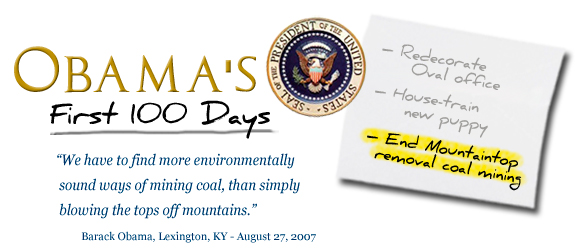
in recent years, the catastrophic practice of mountain top removal has left vast regions of kentucky, west virginia and virginia looking like lifeless, flat moonscapes.  one of the many detrimental and unjust side effects of this greedy retrieval of coal is that residents of these rural counties are left without potable drinking water.  apparently the starting place and source of much of the water throughout the southeastern u.s. are these tiny streams in the eastern part of our state.  right now, president bush is proposing to weaken restrictions that prohibit dumping mountaintop mining waste near rivers and streams.  thank goodness our governor (beshear) and our congressman (ben chandler - an honest and just representative who happens to apply his christian faith to his politics) oppose this.  see this link -http://www.kentucky.com/181/story/596998.html

Monday, November 17, 2008

a blessed weekend

a beautiful time of celebration.  check out all of the pics here...if you took some photos or have any reflections about the weekend, please post them or link to them here.

Communality 10 years - Friday

Communality 10 years - Sat. lunch

Communality 10 years - Sat. night

Communality 10 years - Sat. night

Communality 10 years - Sunday

Communality 10 years - Sunday

Communality 10 years - Sunday

Communality 10 years - Sunday

Thursday, November 13, 2008

ten years

a milestone for communality this weekend.

we celebrate God's good work in and through us and welcome the chance to gather together remembering that our story is part of a bigger work - the kingdom coming on earth as it is heaven.

10years

Monday, November 10, 2008

seeker un-friendly church...un-pc jesus

i though these were mildly amusing comedic clips.


musings of an urban farmer

A friend I hadn’t met yet recently called me asking for help. He had been kicked out of a recovery program and needed to stay occupied for a couple of days. He was worried that if he didn’t stay busy, he would start to make some bad choices.

So I met him at one of our gardens. We worked together. We ended up getting to know each other a bit. We talked about compost, his history, cover crops, his art…all kinds of things. This man noted that this was a much better way to spend a morning than what he usually does.

I wish I could tell you that a couple of hours in a garden cured this man of his longing to use substances. But even as he scattered the wheat berries, he recalled a story Jesus told about seeds and where they land, and which ones grow. They didn’t all grow. In the same way, a short time in a garden is not likely to convince a man that he has better things to live for than alcohol.

But on a sunny fall morning, this man had a chance to do something positive, and he did it. The effects of his choice will ripple out from the event into the lives and stories of others. And this is one reason why it is good to have a garden--to give folks who need it something redemptive to do with their time, with their hands.

(ryan)

Friday, November 07, 2008

Meeting Jesus in Momentary Translation


The day is cold and gray and Martin rummages through the remains. He has ten minutes to collect all he can to fight back the wind that will rip through him when he walks out the door. He approaches me from behind, black hat pulled down over his wild, white hair; two teeth jut out from his otherwise toothless mouth as, with a thick French-Canadian accent, he loudly introduces himself and an onslaught of unintelligible jargon escapes. I look to Sean to help me escape this noisy, ancient remnant of a dying generation. I can’t help but shift back and forth on my feet because of my unease. I can hardly understand his sentences. I catch every second or seventh word. I move up and down one stair at a time. But his eyes, a shocking blue, pop because of the backdrop of his white hair; it’s as though they see right through me, which doesn’t help my discomfort. “Dark times!” I hear as I look into his eyes, followed by a rambling of various words and phrases. I interrupt him to introduce myself, realizing at this point that I don’t even know this crazy man standing directly in front of me. I extend my hand, which he takes. In that moment, I experience momentary translation as Martin introduces himself as Martin Carpenter, son of a Flemish-Jewish father and Scottish mother. A bit more rambling ensues until I hear, “haven’t slept in 45 years,” and I’m thinking, this guy is the antithesis of Rip van Winkle. Except that Martin gets about 30 minutes of sleep a night and roams the streets of Edmonton for the rest of the evening. My thoughts are interrupted again, “but God has given me a big heart and working hands; I worked with these hands all my life until the arthritis set in,” as he touches his shoulders and elbows. “Never been married, don’t have any kids, don’t sleep much” followed by another string I can’t understand. “Hey asshole!” I hear as Martin’s friend descends the stairs, “time to go.” And as they head out the doors, I stretch my head into the cold and gray and shout, “Martin, it was great to meet you,” though he just kept walking, which, unless it’s his thirty minute nap-time, he’s probably doing right now. 

Wednesday, November 05, 2008

On November 5th

I know that some people reading this post will be happy about the outcome of the election, and some will not. In fact, that's one of the things I like best about our community -- that we strive to be a place where these differences, while not insignificant, are ultimately subsumed in the saving grace of our Lord.


Yet all of us might recognize the amazing import of last night's decision, the historic nature of barriers being challenged and broken. To see Jesse Jackson shedding tears that are rich with history, to imagine how others might be experiencing this day -- in all humility, I admit that I don't fully realize what this day means. I'm just grateful to have been a part of it, and to be a part of the 4 years to follow.

No matter whom we supported, let's covenant together to uphold both of these men in prayer, in our conversations together, and with the constant reminder that God sees us, and wants our hearts to be fountains of grace, and truth, and faith, and hope, and love.

Sunday, November 02, 2008

congo

* if you are reading this on a computer screen, you are involved!

tonight at our gathering we focused on the democratic republic of congo.  it was a very moving time of hearing about and seeing images from this place - a horrifying litany of struggle and chaos.

we talked about the fact that we are a community of faith and action and that we cannot ignore such injustice .  we discussed the fact that all of our computers, dvd players, and mobile phones require a precious metallic ore (coltan) found in the congo.  we agreed that we are caught up in the conflict over there...when our lips and cheeks and ears touch our cell phones and our finger tips tap on a keyboard, we come into intimate contact with a war that has resulted in as many as 5 million deaths. we heard that there are at least 120 Congolese refugees in our city and some of them still have family in the middle of the violence today.  

it was a harsh reality to face that our consumerism and convenience fuels, as things are presently, an unrelenting war.  we heard the words of scripture that call the people of God to action and away from frivolous religiosity.  we signed letters to our leaders calling on renewed action to bring fairness and justice to trade.  we prayed against apathy, despair, and impotent rage.  we prayed to be more holy people, more engaged and loving citizens of a world that god so loves.

if you are interested in joining in this work here are a couple of good places to start:

http://www.raisehopeforcongo.org/

http://www.friendsofthecongo.org/

http://news.bbc.co.uk/2/hi/africa/country_profiles/1076399.stm

for related material on christian action in darfur:

http://www.darfurchristianaction.org/

Saturday, November 01, 2008

Jesus for President author to visit on Election Day

this article in our local paper today...here's the first part:

"We've found the hope of the planet ... and it's not Obama or McCain or even America, but Christ in the body of the church." — Shane Claiborne, co-author of Jesus for President.

Shane Claiborne believes in change, but he doesn't endorse Barack Obama. He's not a John McCain man, either.

Claiborne also is not big on America's military-industrial complex, conspicuous consumption or the suburbs. He doesn't care for the intertwining of church and state: Christians should be Christians across borders, he thinks, not Christian-Americans who think that respect for God intersects with their respect for the country's ability to push around others.

Claiborne, raised in East Tennessee and now living in Philadelphia, has a different idea for Christians: His latest book, written with Chris Haw, is called Jesus for President. He'll discuss the book at Asbury College in Wilmore on Election Day.

Either you find the book witty, or you're a more earnest type of churchgoer who says that of course Jesus for president is a swell idea, but then who's going to fret about economic meltdown and universal health care? The man from Galilee wasn't exactly a policy wonk.

Claiborne, a dreadlocked inner-city resident who also wrote 2006's The Irresistible Revolution: Living Life as an Ordinary Radical, is an adherent of New Monasticism, which is more about how Christianity walks the walk and less about suburban churches in which worship is an isolated, once-a-week affair like getting an eternal-life shopper's card punched. The movement includes the Communality group in Lexington.